
Kbelnice: Landscape and Historic Memorial Sites
Accommodation in Kbelnice
Kbelnice can be explored through two distinctive aspects: its landscape and its culture of remembrance. Most of the village lies in the valley of the Kbelnický potok; the Cidlina flows along its eastern side. Kbelnice is also home to an ossuary, a military cemetery and a monument to the Holy Trinity in the centre of the village. These sites differ in their historical significance and location. When planning a stay, you can therefore focus your visit on both the valley and river landscape and the memorial sites.
Landscape and Orientation in Kbelnice
Geographically, Kbelnice can be described in relation to two waterways. Most of the village lies in the valley of the Kbelnický potok, while the Cidlina flows along its eastern side. The valley describes the location of the largest part of the village; the Cidlina marks another aspect of its landscape. Together, these features give the landscape its distinct contours and offer a way to explore the destination alongside its historic sites. A tourist signpost also serves as a point of reference: at the crossroads near Hospoda u Rumcajse in Kbelnice, it points in two directions.
The Ossuary and Memorial Sites from 1866
The ossuary in Kbelnice is a memorial from the Austro-Prussian War of 1866. It contains the remains of fallen soldiers and tombstones. The grounds of the Kbelnice ossuary also include military and civilian graves. This memorial site thus brings together several forms of remembrance: the ossuary, tombstones and graves with both military and civilian associations. Behind Kbelnice, along the road from Jičín to Turnov, is a military cemetery for those who fell in the 1866 war. It complements the ossuary with another specific site linked to the same war. For travellers interested in history, this distinction offers a useful way to understand the different memorial sites rather than grouping them together as a single attraction.
The Chapel and Its Later Construction
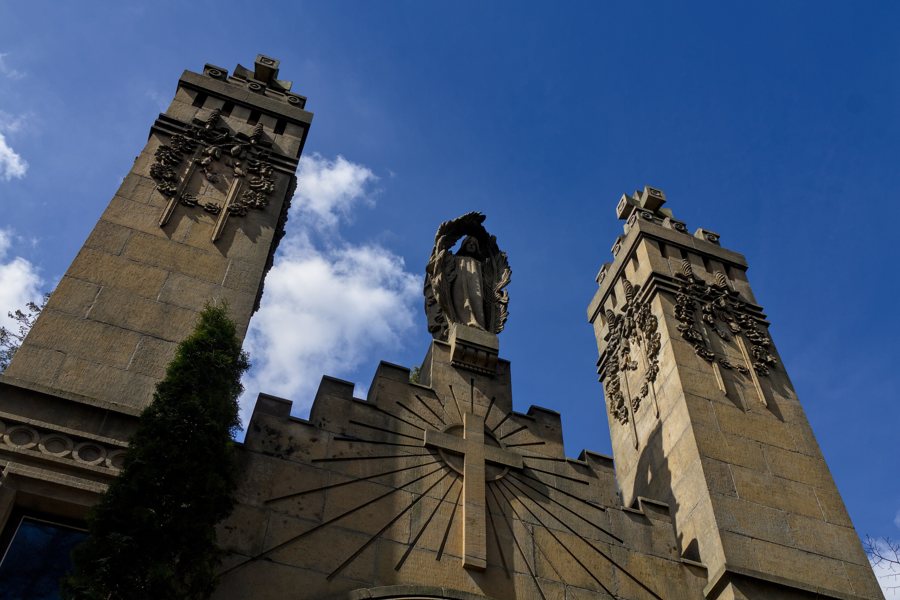
The military cemetery includes an Art Nouveau chapel built between 1904 and 1906. It was constructed almost four decades after the war of 1866. This makes it possible to distinguish chronologically between the cemetery’s historical association and the chapel’s later architectural design: the cemetery commemorates those who fell in the war, while the chapel belongs to a later period of construction. This gap in time also makes the memorial site interesting from an architectural history perspective. The dates and the Art Nouveau style complement each other, giving the chapel a distinct character within the village.
A Monument in the Centre of the Village
A monument to the Holy Trinity stands in the centre of Kbelnice. Its dedication provides a different thematic focus from the war associations of the ossuary and the military cemetery. Taken together, the monuments illustrate different aspects of local history: a centrally located memorial site and places linked to the war of 1866. When planning your trip, you can consider these themes separately and decide which aspects of Kbelnice interest you most.
Kbelnice as a Destination for Your Stay
If you are planning an overnight stay, you can choose Kbelnice based on your preferred focus: the valley and river landscape, memorial sites from the war of 1866, or the monument in the centre of the village. These themes give your trip planning a concrete starting point.
Discover more destinations: Samšina, Dílce, Kacákova Lhota, Podulsi, Parezska Lhota, Židovice, Staré Smrkovice, Luzany U Jicína.
For the wider travel overview: Okres Jičín.

