
UNESCO World Heritage in Czechia: 17 sites and regional routes
The 17 UNESCO World Heritage sites in Czechia range from Prague’s historic centre and old spa towns to mining and natural landscapes. For a first trip, regional routes make more sense than trying to tick off every site in a single holiday. Living traditions and biosphere reserves are separate UNESCO designations.
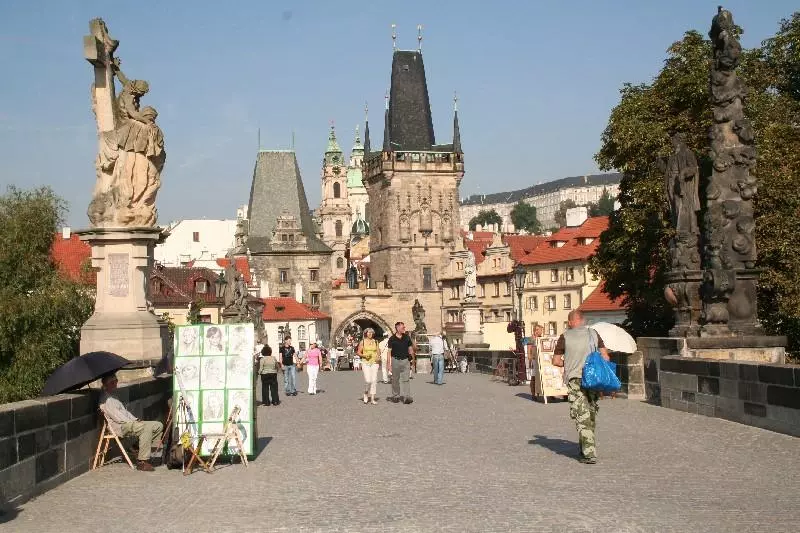 Die Prager Altstadt ist UNESCO Weltkulturerbe
Photo: Dago Wiedamann
Die Prager Altstadt ist UNESCO Weltkulturerbe
Photo: Dago Wiedamann
UNESCO World Heritage sites in Czechia: key facts
- Czechia has 17 sites on the World Heritage List: 16 cultural and one natural.
- The listed sites are spread across Bohemia and Moravia; several are transnational or serial sites.
- An inscription can cover an entire historic centre, cultural landscape or several separate locations—not just one building.
- The most recent Czech inscription is Žatec and the Landscape of Saaz Hops, added in 2023.
- The natural heritage site is the Jizera Mountains Beech Forests, the Czech part of a transnational beech forest heritage site.
- World Heritage status does not determine opening hours, admission or access to interiors; these conditions vary by operator.
- Intangible cultural heritage and biosphere reserves belong to other UNESCO programmes and are not automatically World Heritage sites.
Prague as a base for your first World Heritage trip
The Historic Centre of Prague is an extensive site made up of several districts and architectural ensembles, not a single attraction. If you have only one day, choose a limited area and allow time to travel between the Old Town, Malá Strana and the Castle District. With two or three full days, you can explore these areas at a more relaxed pace; allow extra time if you plan to visit many interiors.
Prague Castle in Hradčany is within the historic centre and does not count as an additional Czech World Heritage site. For the other districts and day trips, see the Prague travel guide. If Prague is your overnight base, choose your accommodation location in Prague based on the routes you actually plan to take, rather than proximity to the centre alone.
Kutná Hora makes a good standalone day trip from Prague: the World Heritage site includes the historic centre with St Barbara’s Church, as well as the Cathedral of the Assumption of Our Lady in Sedlec. These sights are not in the same square, so plan to visit the Old Town and Sedlec as two separate areas. Extra travel is needed between them; don’t try to treat both as one short walking tour. If you are staying several nights, Kutná Hora can be a stop along the way rather than something squeezed between two tightly scheduled visits to Prague.
South Bohemia, Vysočina and East Bohemia
In South Bohemia, Český Krumlov and Holašovice offer different kinds of visits. Český Krumlov combines the historic town centre on the Vltava with the castle complex; you can explore the Old Town and castle area separately. The town is easy to explore on foot, but visits to interiors have their own access and guided-tour arrangements. Holašovice is a historic village with a well-preserved, unified appearance. It is not another part of Český Krumlov’s Old Town, but a separate rural destination that requires its own journey. Combine the two only if your route and the time available allow it; an overnight stay in Český Krumlov or České Budějovice gives you more flexibility to explore the surrounding area.
Further east is Telč and its historic centre. The main square, with its façades and arcades, and the château are two distinct highlights. A short walk can focus on the centre, while a longer stay leaves time to visit the château and explore the surroundings. If you have only a few hours in Telč, you can focus on the square and Old Town; visiting the château interiors is a separate activity with its own access arrangements.
The Pilgrimage Church of St John of Nepomuk at Zelená Hora is near Žďár nad Sázavou. It is a distinct architectural and pilgrimage site, not another district of Telč. In Třebíč, the Jewish Quarter and the Basilica of St Procopius are part of the same inscription, so allow time for both. Litomyšl adds its Renaissance château to an eastern route. Telč, Zelená Hora, Třebíč and Litomyšl are not all within one walkable area. Arrange them according to your actual direction of travel and leave enough time to get between locations.
Moravia: urban architecture, gardens and cultural landscapes
In Brno, Villa Tugendhat is a single building showcasing modern residential architecture. It differs from a historic city centre: if its interior design is the main reason for your trip, plan the villa as a separate visit and check availability for your preferred date with the operator. The Brno travel guide can help you combine your visit with other city sights and choose where to stay.
The Lednice-Valtice Cultural Landscape comprises more than one château. Its parkland, buildings and route connecting Lednice and Valtice make it a landscape visit that a single short stop will barely scratch the surface of. Decide in advance whether you are most interested in a château tour, the gardens or the wider cultural landscape. A visit to Lednice Chateau is one possible highlight within the larger area, not a substitute for experiencing it as a whole.
Kroměříž combines a château and gardens; in Olomouc, the Baroque Holy Trinity Column is the individual landmark listed in the city centre. These make good stops in their own right, but they are in different locations and should not be treated as one short excursion. Třebíč’s Jewish Quarter and basilica are also among Moravia’s cultural highlights, while the World Heritage cultural landscape around Lednice stretches across several locations. To visit Moravia’s sites, you could use Brno as a city base, explore Lednice-Valtice as a multi-part landscape visit, and choose Kroměříž or Olomouc for another stop. Two overnight bases are often a better option if you want to explore not only cities but also gardens and landscapes.
West and North Bohemia: spa towns, mining and hop-growing landscapes
The Great Spa Towns of Europe is a serial World Heritage site linking spa towns in several European countries. The Czech contribution is the West Bohemian Spa Triangle of Karlovy Vary, Mariánské Lázně and Františkovy Lázně; together, the three towns make up one inscription, not three separate Czech World Heritage sites. Their colonnades, parks and townscapes tell the story of European spa culture, but do not imply any medical benefits. Compare the towns by their architecture, walking routes and the kind of stay you are looking for. For a closer comparison, read the travel guide to the West Bohemian Spa Triangle.
The Erzgebirge/Krušnohoří Mining Region is a transnational mining landscape shared by Czechia and Saxony. The inscription covers several mining towns and traces of resource extraction, so it cannot be fully explored at a single museum or viewpoint. Choose whether to focus on the Czech or Saxon side, then select individual sites rather than treating the whole region as one quick stop.
Žatec and the Landscape of Saaz Hops link the town with hop fields and places shaped by cultivation, trade and processing. The inscription therefore extends beyond a walk through the historic centre. A visit can combine historic urban areas with a look at the rural cultural landscape; what you choose to see will depend on whether you want to focus on architecture, hop-growing history or the landscape.
The cultural landscape at Kladruby nad Labem was designed for breeding and training ceremonial carriage horses. The focus here is on the relationship between the stud farm and the landscape, rather than a typical château visit. Before planning a visit to the interiors or a guided tour, check the stud farm’s access arrangements; UNESCO inscription is not a ticket or a guarantee that every area will be open at all times.
Distinguishing World Heritage sites, living traditions and reserves
The World Heritage List includes clearly defined cultural and natural sites. These include architectural ensembles, historic city centres, cultural landscapes and transnational beech forest areas, whose Czech part is the Jizera Mountains Beech Forests. If you plan to visit a natural heritage site, follow the protected area’s rules and use only paths that are open to visitors. A UNESCO designation does not mean that every part of a forest can be entered or that every path is suitable for everyone.
Intangible cultural heritage, by contrast, refers to living practices and knowledge, such as oral traditions, music, festivals, social customs and craft skills. It can be experienced in a particular place, but it is not itself a building or a precisely defined visitor site. An inscription also does not guarantee a performance or event on the dates of your trip.
UNESCO biosphere reserves are part of the Man and the Biosphere Programme. They combine ecosystem protection with sustainable development and human activity. Their boundaries may overlap with other protected areas or cultural landscapes, but reserve status is not the same as World Heritage inscription. Similarly, a Czech historic village or urban conservation area is a separate heritage-protection designation; it does not automatically make that place an additional UNESCO site.
FAQ / Frequently asked questions about UNESCO World Heritage sites in Czechia
How many UNESCO World Heritage sites are there in Czechia?
There are currently 17 inscriptions: 16 cultural and one natural. For transnational or serial sites, Czechia’s contribution is part of a joint World Heritage inscription, so the number of locations you can visit is greater than 17.
Is a UNESCO site automatically open to visitors?
No. World Heritage status is a designation and a commitment to protection, not an admission ticket. Historic city areas can usually be experienced from public routes; interiors, guided tours and individual sites have their own access arrangements. Plan these visits according to the information provided by the relevant operator.
Are biosphere reserves or intangible culture also World Heritage?
No, these are different UNESCO designations. Biosphere reserves belong to the Man and the Biosphere Programme; intangible cultural heritage covers living practices and knowledge. Both can be of interest to travellers, but neither is automatically one of Czechia’s 17 World Heritage sites.
Should I visit all 17 sites on one trip?
Only if you are planning a longer tour. The sites are spread across much of the country and offer very different kinds of visits. For a long weekend, Prague with a suitable day trip is more realistic; if you have more time, choose one region and visit two or three sites there, rather than planning long transfers every day.
