
Discover Stupno: Railway history and archaeological traces
Accommodation in Stupno
Stupno brings together railway history, prehistoric traces and architectural history. The railway museum, Křemenáč Hill near Stupno and the Bašta natural monument west of the village offer different ways to explore the area's history. You can decide for yourself which of these themes will shape your stay as you plan your trip.
Railway history in Stupno
The Stupno Railway Museum explores the history of the local railway from Chrást to Radnice. Another chapter in railway history concerns the railway from Chrást to Stupno: it began operating on 1 April 1863. The endpoints are therefore different: Chrást–Radnice is the museum's subject, while the date refers to the line to Stupno.
The exhibition is located inside the station building, with an entrance from the street. The railway museum also serves as an information centre for municipalities along the railway line. If you are planning to visit the exhibition, check the current opening hours in advance.
Archaeological traces and architectural history
In the Eneolithic period, a hilltop settlement of the so-called Cham culture stood on Křemenáč Hill, also known as Křemelák, near Stupno. Surviving pottery sherds from Křemenáč provide evidence of the earliest pottery production in Břasy. The area's archaeological history therefore reaches far back before the railway history of the 19th century.
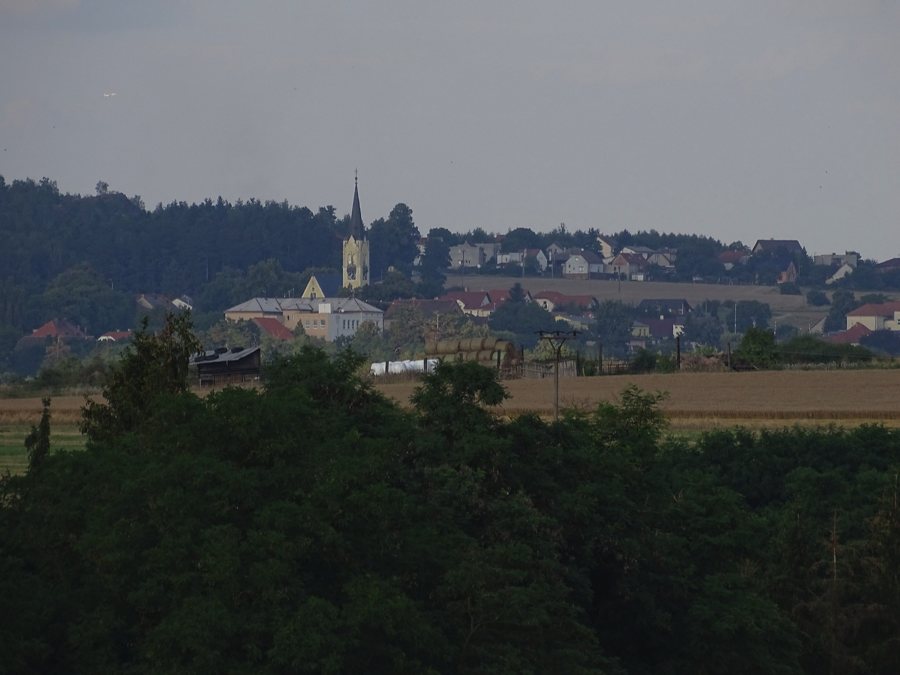
The architectural history of the Church of St Lawrence also includes several precisely dated events: the original church dated from 1352, burned down in 1854 and was rebuilt in 1880. This sequence offers another insight into the area's historical development.
Landscape and other points of interest
The Bašta natural monument lies west of Stupno near Kříše and preserves part of a coal seam from the former Kliment open-cast mine. Here, a protected landscape meets the history of past coal mining. This offers a different perspective on the past from the archaeological finds at Křemenáč or the architectural history of the church.
In the municipality of Břasy, the Ultramarinka leisure centre combines a 33-metre-high chimney, a reminder of the area's former industrial use, with a range of leisure activities: these include an inline skating track, a pump track, a disc golf course, beach volleyball, a climbing wall and swimming.
K21 in Stupno is an exhibition and information centre. Together with the railway museum, it adds another exhibition and information venue in Stupno. If you have specific plans to visit, it is worth checking the venues' opening hours in advance.
Stupno as a destination and place to stay
The village's history can be explored across several periods: the hilltop settlement at Křemenáč points to the Eneolithic period, the church to architectural events from the 14th to the 19th century, and the railway history to 1863. Bašta adds a connection to the former open-cast mine. This lets you decide which themes matter most for your stay.
If you are looking for a hotel in Stupno, this thematic focus can help you choose your destination: are you mainly interested in railway history, archaeology, architectural history or the landscape?
For the broader travel overview: Břasy.

