
Druztová: Churches, Castle Ruins and Nature
Accommodation in Druztová
Druztová combines a layered architectural history with themes from nature. The town’s history includes the Church of St. Mary Magdalene, the Chapel of St. John of Nepomuk and the ruins of Věžka Castle. There is also the Malochova skalka Nature Reserve and a nature trail through the Horní Berounka Nature Park. If you are planning a trip, you can choose to focus on architecture, landscape or local traditions tied to a particular time of year.
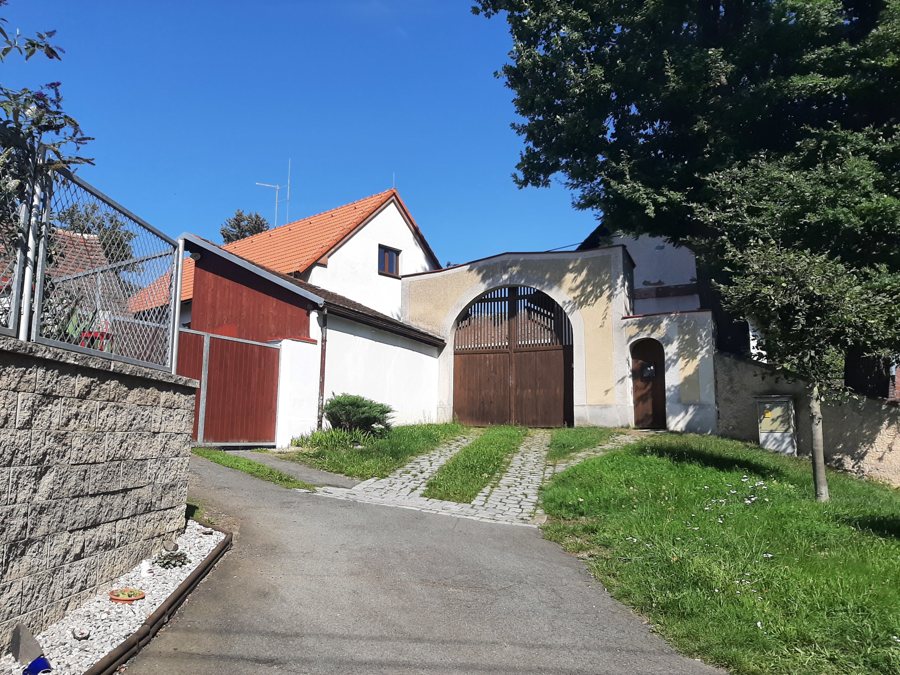 File:Druztová, house No 16.jpg
Photo: Pavel Hrdlička (Czech Wikipedia user Packa ) via Wikimedia Commons, CC-BY-SA-4.0
Church and Chapel: Architectural History Across Several Eras
The Church of St. Mary Magdalene was built in 1351 and was originally Gothic. It was expanded in 1699: the presbytery received a barrel vault, and the nave a wooden coffered ceiling. A barrel vault is a long, arch-shaped ceiling; a coffered ceiling divides the surface into individual panels. The terms describe different designs in the two parts of the church. The pseudo-Gothic high altar, dating from 1906, adds another dated feature to the building’s history.
The Chapel of St. John of Nepomuk offers another architectural point of interest. The Baroque building has a hexagonal floor plan, and a statue of St. John of Nepomuk stands above the entrance portal. The chapel was completed in 1745 and consecrated after 196 days of construction. While the church’s history includes several dates relating to its construction and design, the chapel brings together its architectural form, statue and specific consecration date as a compact historical theme.
Masses are still celebrated in the chapel during winter. If you would like to attend one, check the current service times locally in advance. For planning your trip, it is useful to distinguish between the permanent architectural details and this seasonal occasion: architecture can be chosen as a theme regardless of a particular date, whereas a service is tied to winter and current schedules.
Castle Ruins and Nature in the Horní Berounka
Věžka Castle was destroyed in 1478. Today, only remnants of the perimeter walls and inner buildings remain. The castle ruins are on a rocky peak above the left bank of the Berounka in Druztová. Their history and the limited remains give the site a different historical emphasis from the churches: here, the focus is on the castle’s destruction and what remains of the complex.
The protected Malochova skalka Nature Reserve, home to rare flora, is also located in the Horní Berounka Nature Park. Another way to explore the landscape is the “Po stopách Františka Molocha” nature trail. Established in Druztová in 2003, it has eleven information panels and runs through the nature park. The reserve and the nature trail offer different ways to experience nature: the reserve is defined by its protected status and flora, while the trail’s route and information panels provide specific points of orientation. This lets you focus your trip on cultural history, nature or a combination of both.
Local Traditions and When to Visit
The Magdalenská pouť pilgrimage festival in Druztová takes place in July and includes snail races held every two years. As no specific date for your trip is given, check the current event dates locally in advance. Another culinary point of interest is Stodolní hospůdka, where you can sample beers from Pivovar Radouš brewery. The July tradition and the tasting opportunity add insight into local events and beer culture to the architectural and nature themes.
Choose Accommodation to Suit Your Trip
If you are looking for hotels for a trip to Druztová, first consider whether a seasonal occasion should shape your stay. For the Magdalenská pouť or the winter masses, check the current dates or service times and plan your search around the confirmed travel period. If you are focusing on the church, chapel, castle ruins or nature park, historical and landscape themes will take center stage.
Discover More Destinations
Discover more destinations: Krašovice, Vysoká Libyně, Plasy, Kozojedy, Trnová, Líté, Vejprnice, Obora.
For the broader travel overview: Okres Plzeň-Sever.

